
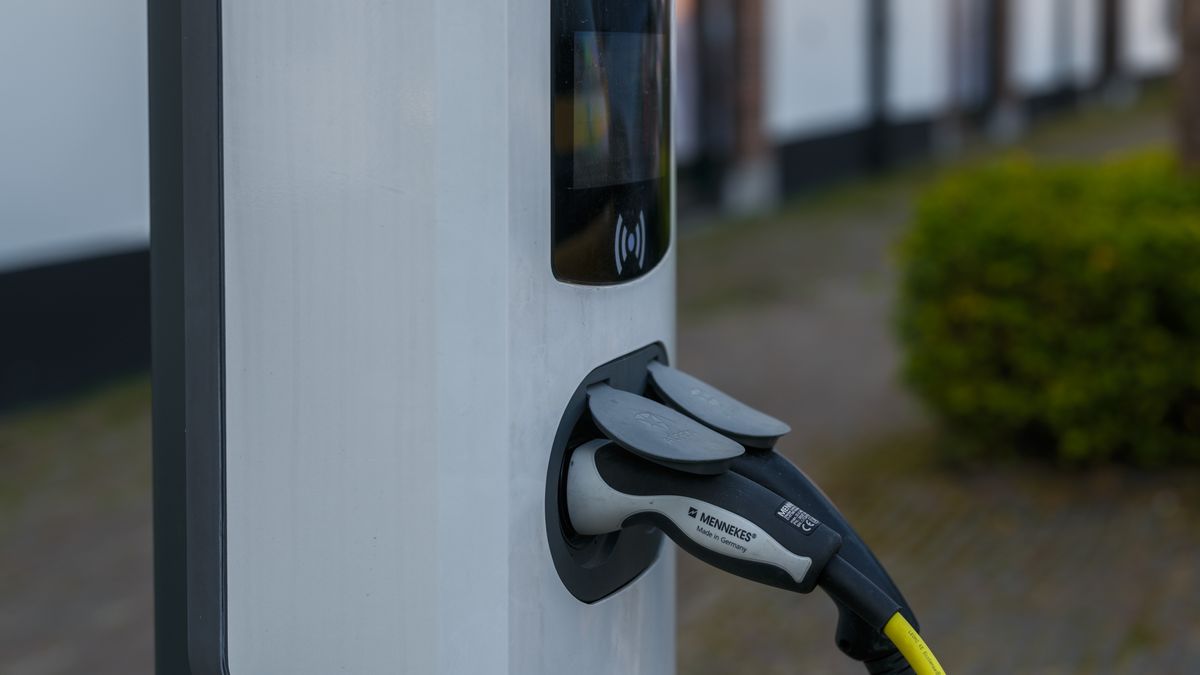
If you are new to electric cars, the alphabet soup of connectors can feel like the biggest barrier to ownership. The reassuring news is that the UK settled on a small number of standards years ago, and once you know which plug your car uses at home and which it uses at a rapid charger, the rest is just detail. Almost every electric car on UK roads has a Type 2 socket for slower charging, and most also have a CCS socket for fast charging. A handful of older models use CHAdeMO instead.
The single most useful thing to understand is this: your charging speed is decided by the car, not the charger. Plug a car that accepts 50kW into a 350kW unit and it will still charge at 50kW. The charger offers; the car decides how much it can take.
Type 2 is the European standard and the one you will meet most often. It has seven pins and works with both single-phase and three-phase AC supplies. At home, a dedicated wallbox usually delivers 7kW on a standard single-phase supply, which adds roughly 25 to 30 miles of range per hour. That is comfortably enough to refill most cars overnight.
Charging from a three-pin domestic socket is technically possible, but it is painfully slow at around 2.3kW — perhaps 8 to 10 miles an hour — and best kept for genuine emergencies. It also puts a steady load on wiring that was never designed for it, so get an electrician to check the circuit before relying on it.
Public destination chargers in car parks, hotels and supermarkets are usually 7kW or 22kW Type 2 posts. Many are untethered, which means you bring your own cable — keep one in the boot, coiled and dry. Bear in mind that a 22kW post only delivers 22kW if your car has a three-phase onboard charger. Plenty of cars cap out at 7kW or 11kW on AC, no matter what the post advertises.
CCS, or Combined Charging System, looks like a Type 2 plug with two extra DC pins below it. It is the dominant rapid charging standard in the UK and covers everything from 50kW units to ultra-rapid 350kW installations. Rapid chargers are almost always tethered, so you simply park, plug in, and pay — usually by contactless card or an app.
CHAdeMO is the older Japanese standard, found on early examples of certain hatchbacks and a few other models. It typically peaks around 50kW in the UK, and new CHAdeMO installations are increasingly rare as the standard is quietly retired. If your car uses CHAdeMO, plan long journeys with a little more care and always have a second charging option in mind.
Speed is measured in kilowatts, and it helps to split chargers into three rough bands. Slow charging means up to about 7kW, which is home and overnight territory. Fast charging covers 7kW to 22kW, the sort of thing you use while parked at a supermarket. Rapid means DC charging above roughly 43kW, and ultra-rapid means 100kW and above.
In real terms, a 50kW rapid charger adds around 100 miles in half an hour on an efficient car. A 150kW charger, on a car that can accept that rate, might add 150 to 200 miles in 25 minutes. Two limits always apply. On AC, the car's onboard charger is the bottleneck. On DC, the battery's acceptance curve is — and above about 80 per cent most cars taper sharply to protect the cells. On a long trip it is genuinely quicker to do two short top-ups to 60 or 70 per cent than one long charge to 100 per cent.
Temperature matters just as much. A cold battery on a January morning charges noticeably more slowly, which is why many newer cars pre-condition the battery when you set a charger as your destination.
For most drivers, home charging does the vast majority of the work. Plug in when you get home, let the car manage it, and wake up to a full battery. On a 7kW wallbox, an empty-to-full charge takes roughly six to ten hours depending on battery size. If you are on an off-peak electricity tariff, schedule charging overnight and the cost per mile becomes very low indeed.
Think about the practicalities before you buy. If you cannot charge at home or at work, public charging is workable but it adds time and cost to your week. If you park on the street, a cable trailing across the pavement is both a trip hazard and, in many places, not permitted. A tethered wallbox is convenient; an untethered one is more flexible if you might change cars. Either way, use a qualified installer and make sure the unit is properly weatherproofed outdoors.
Get comfortable with those basics and charging becomes refreshingly dull — which is exactly what you want from the process of fuelling a car.

Hi, my name is Anthony kuber. I am artist and fashion designer.
I love to travel and writing blogging.
Your email address will not be published. Required fields are marked *
Software Developer & Writer
Hey, I'm Diva, a developer and writer blending code and creativity. I'm driven by a deep curiosity and a relentless pursuit of excellence. Join me as I craft digital solutions and captivating stories.


